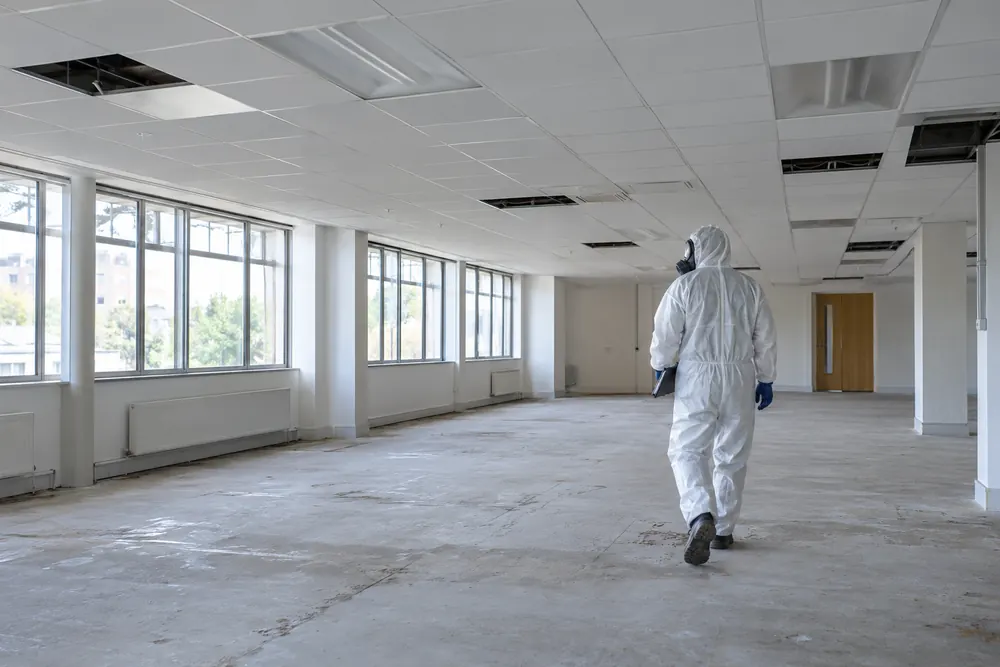
Match The Investigation To The Works
A refurbishment survey focuses on the part of a building affected by proposed works. A demolition survey addresses the structure to be demolished. Both differ from an inspection for routine occupation because they need to investigate concealed materials within the agreed project scope.
Commercial projects may involve removing partitions, replacing floor finishes, altering service routes or stripping plant rooms. An existing management report may record visible materials without addressing those hidden locations. Share drawings and a clear work description early so the survey boundary reflects where contractors will cut, drill, break or dismantle.
What Intrusive Inspection Involves
The surveyor may need to open voids, lift finishes and inspect behind linings to locate suspect asbestos-containing materials as far as reasonably practicable. The level of investigation follows the works rather than a standard room checklist. This can cause damage and needs permission, isolation and access arrangements agreed in advance.
A commercial unit can contain successive layers of alterations that are not obvious from a visual inspection. The survey specification should address service penetrations, concealed boards and other relevant interfaces. Where part of the scope cannot be inspected, the report must say so and describe the effect on the proposed work.
Legal Duties Before Disturbance
The Control of Asbestos Regulations 2012 require asbestos risks to be identified before work that could expose people. Regulation 5 addresses identification before work begins. HSE’s HSG264 survey guidance describes the purpose and scope of refurbishment and demolition surveys.
Construction planning must also address the Construction (Design and Management) Regulations 2015, including suitable pre-construction information. The asbestos investigation should feed into the design and construction sequence. A survey report does not replace a contractor’s risk assessment or plan of work.
The Survey Sequence
Start with the proposed work package, drawings, existing reports and a discussion of the programme. Identify exactly which buildings, rooms, elevations and service systems are included. Agree responsibility for opening up, isolating utilities and arranging safe access to high or confined areas.
The affected area must be vacated for intrusive inspection, with controls to protect other occupants from disturbance. The surveyor investigates, records and samples suspect materials using appropriate precautions. After inspection, the area must be assessed as fit for reoccupation before staff or other users return.
The report should explain the inspection boundary, findings, sample results and limitations. Pass it to the designers and contractors who will use it. If design changes expand the work beyond the surveyed area, review the survey coverage before the new work proceeds.
Using The Findings In A Tender
A useful tender package links asbestos locations to the work drawings and identifies what needs specialist action before other trades enter. Avoid asking a strip-out contractor to infer the meaning of a sample number without the supporting plans. Check that the removal scope and the survey cover the same physical areas.
A positive finding does not mean every material in the building must be removed immediately. The project team should decide how the proposed works interact with the materials and arrange the appropriate controls. Our commercial asbestos removal guidance explains the next procurement questions.
Cost And Programme Factors
The extent of opening up, construction complexity, number of samples and access arrangements all affect cost. Vacating occupied rooms, isolating services and using access equipment may require separate arrangements. Discuss making good with the project team because an intrusive inspection is different from a cosmetic condition survey.
Allow time for laboratory analysis, review of findings, any further investigation and the removal or management work identified. Confirm the report date and exclusions in the quotation. A clearly scoped investigation is more useful than a low initial price that leaves key areas unexamined.
Your Questions Answered
Do We Need A Refurbishment Survey For A Small Fit-Out?
A refurbishment survey may be needed even for a small fit-out when the works disturb building fabric that could contain asbestos. The relevant issue is the disturbance, rather than the contract value. Provide the work description and affected areas so the investigation can be proportionate to the actual ceiling, wall, floor or service alterations.
Can Staff Stay In The Survey Area?
Staff must leave the area undergoing an intrusive refurbishment or demolition survey because the inspection can disturb concealed asbestos materials. Separation from the rest of the premises needs to be effective. Reoccupation follows the surveyor’s confirmation that the area is fit for use, with further checks where the circumstances require them.