Deciding Whether Removal Is Needed
A positive asbestos result does not automatically require immediate removal. The material’s condition, likelihood of disturbance and the intended work determine the appropriate response. Some materials can be managed in place, while damage or a construction project may make removal the suitable option.
For commercial buyers, the starting point is a survey or other reliable identification tied to the actual work area. A contractor needs to understand the material, its location, extent and access conditions. If you only have a photograph or an old report with restrictions, resolve those information gaps before agreeing a removal scope.
When Does Asbestos Removal Require An HSE Licence?
Most higher-risk asbestos work must be undertaken by an HSE-licensed contractor. Whether a particular task is licensable depends on the material, the nature of the activity and the risk assessment. Some work is non-licensed, and some non-licensed work has notification and additional requirements.
The classification is not a choice based on price or convenience. Ask the proposed contractor to explain it and provide evidence of a current licence when needed. HSE’s guidance on licensable work explains the distinction. This website does not claim to hold a removal licence.
What The Work Plan Must Address
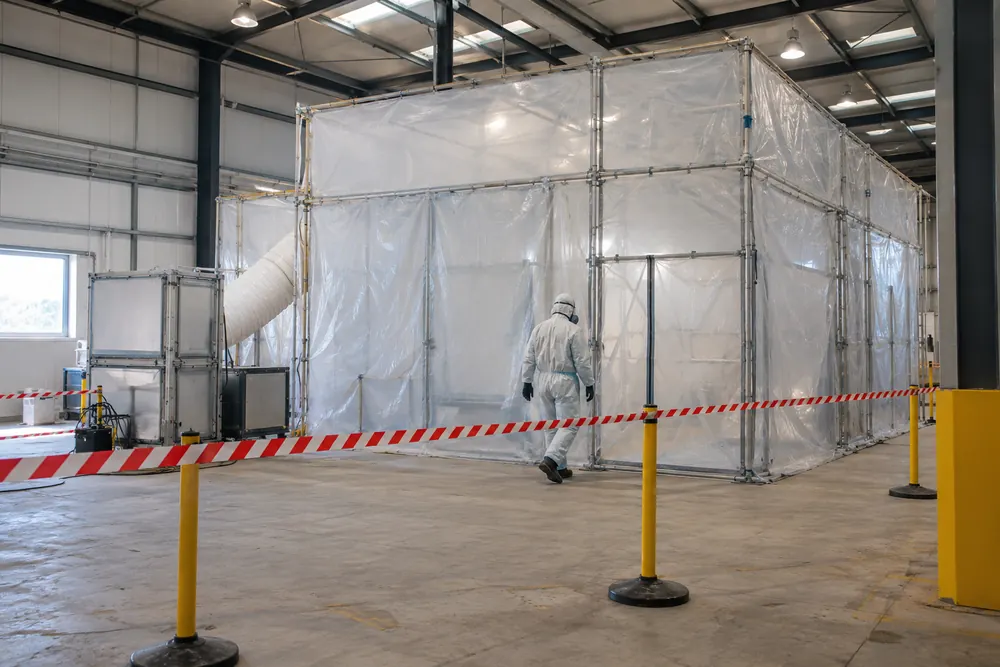
The Control of Asbestos Regulations 2012 require suitable risk assessment and a plan of work for asbestos activities. The contractor should explain how exposure and spread will be prevented or controlled, how the area will be separated and what decontamination arrangements are required. Controls need to fit the task and premises.
Consider neighbouring occupants, shared services, delivery routes and the other trades expected on site. Removal can affect fire routes, power isolation and the construction programme. These interfaces need to be agreed before mobilisation, with a clear point of contact able to manage changes.
A Practical Procurement Sequence
First, share the survey, laboratory results, work drawings and any restrictions. Confirm whether the objective is localised removal, enabling a refurbishment package or clearing a structure before demolition. The contractor should review whether further investigation is needed before preparing the final scope.
Next, agree the method, site controls, notification requirements and programme. Confirm who is responsible for any analyst appointment and the evidence required for handover. Do not book follow-on trades into the work area before the release arrangements are understood.
During the job, access must follow the agreed controls and the work boundary must be maintained. At completion, obtain the relevant completion records, analytical certification where required and waste documentation. Update the asbestos register to reflect what has actually been removed and any material that remains.
Waste And Site Handover
Asbestos waste needs appropriate packaging, transport and disposal through an authorised route. Commercial clients should confirm the waste carrier arrangements and obtain the relevant hazardous waste consignment documentation. General skips and routine mixed construction waste collections are not a substitute for the correct process.
The Environment Agency guidance for hazardous waste carriers explains transport responsibilities. For applicable licensed removal work, the analyst’s four-stage clearance process and certificate of reoccupation are separate from the contractor simply stating that the work is finished. Our air testing page explains that boundary.
What Changes The Removal Cost
Cost depends on material type, amount, condition, access and the control measures required. Enclosures, decontamination facilities, work at height, phased attendance and restricted operating hours can affect the quotation. Testing, analytical attendance, making good and reinstatement may sit in separate packages.
Compare written scopes rather than only the final figure. Ask what is excluded, who deals with any hidden additional material and what records will be provided at handover. An unclear allowance for waste or clearance can leave a commercial client with extra work and an unusable area.
Include the postcode, building use and proposed project dates in your enquiry. If the material has been disturbed, stop work and keep people away while competent advice is obtained. Do not move debris or try to make the area presentable before an assessment, as that can spread contamination and complicate the response.
Your Questions Answered
Does All Asbestos Removal Need A Licensed Contractor?
Asbestos removal does not always need a licensed contractor, but most higher-risk work does. The material, task and risk assessment determine the category, and some non-licensed work is notifiable. Ask for the proposed classification and supporting competence evidence before appointment, and check any licence required against the contractor’s current details.
What Documents Should We Receive After Removal?
Asbestos removal handover documents should match the agreed work and may include completion records, hazardous waste consignment documentation and analytical clearance certification where required. Check that the location and extent are clear. Keep the evidence with your building records and update the asbestos register so future contractors know what remains.